
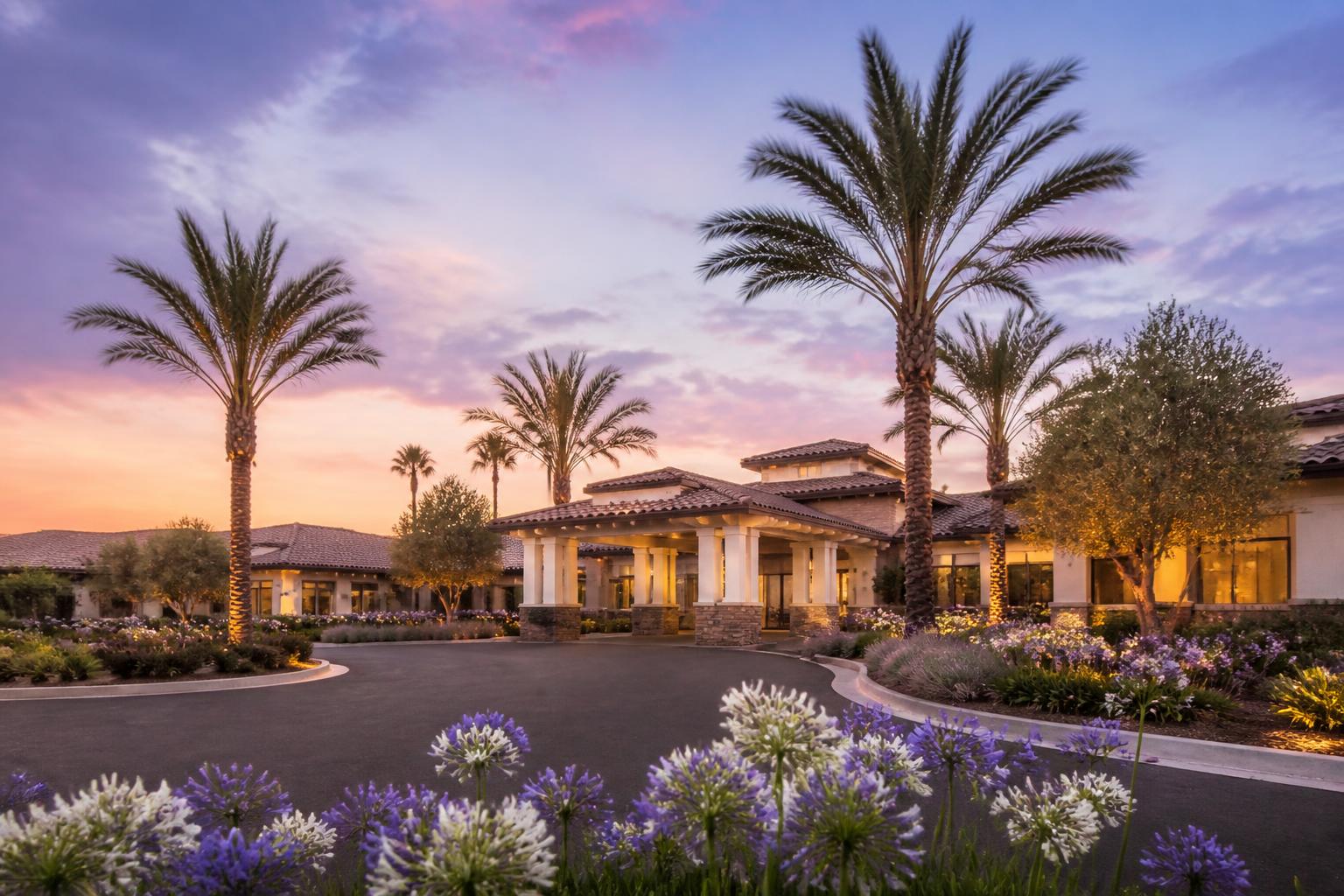
What assisted living means on a Santa Monica licence
Assisted living is a marketing word. The licence underneath it is an RCFE, exactly the one a six-bed house holds. What separates the large communities from the small houses is not the licence, it is scale: a dining room, an activities calendar, a front desk, care staff on rotating shifts, and a base rent with care tiers on top instead of one all-in monthly figure.
The split in this city is stark. 6 buildings hold 646 of Santa Monica's 696 licensed beds. The 9 houses hold 50. If you are picturing a range of mid-sized places to choose between, there is no such range here, and it is better to know that in the first week than the third.
Size changes the day, not just the price
A 44-bed community and a 174-bed community are different places to live. In the smaller one a resident sees the same few staff most days and gets known quickly. In the largest there are proper shifts, relief staff and more turnover, and also a real activities programme, a dining room worth going down to, and somebody at the desk at two in the morning.
Neither is better. Which one suits depends on two things nobody asks on a tour: whether your father wants people around or wants to be left alone, and whether he can reliably find his own way back to his room. The second question rules out more places than the first.
Where they are, and why that decides more than you think
The register puts Santa Monica's homes in 3 ZIP codes: 90403 has 6, 90405 has 5, 90404 has 4. Nothing at all is licensed in 90402, north of Montana. So if your parents have lived north of Montana since they married, there is no licensed care home in their own neighbourhood at all, and the nearest options are down in Wilshire-Montana, Mid-City or Ocean Park.
That sounds like a footnote until you are the one making the drive. The distance that matters is from the adult child's house, not from the parent's. A community you pass on the way home from work gets visited. One that needs a special trip gets visited less, whatever everybody promises at the start. We have watched families choose on sentiment and then quietly stop coming, and it is the saddest failure mode in this work.
- The drive from your house at six on a weekday, not on a Sunday morning
- Parking, because on the numbered streets there frequently is none
- Whether her friends can get there on a bus without changing twice
- Which hospital they send her to if she falls at night
What to ask on a tour, and what to ignore
Ignore the lobby. Ignore the fish tank and the baking smell. Ask to see the room you would actually be offered, not the model apartment, and ask to see it on the floor it is on.
- What the base rent covers, in writing, and what is billed on top of it
- Who assesses the care level, how often, and whether you are told before the bill changes
- Overnight staffing, as a number, for the wing she would live in
- The last state inspection, and what was cited
- How much notice the community gives if it decides it can no longer meet her needs
The question almost nobody asks
That last one. A community can decide a resident's needs have grown beyond what its licence allows, and then your family is moving somebody twice, at a worse moment, with less time. Ask what that process looks like, ask how often it has happened, and ask whether anything on the same campus could take her instead.
A good operator answers all of that without changing tone. The reaction to the question tells you more than the answer does.
Memory care is a different conversation
Some of the large Santa Monica communities run a secured memory care wing under the same licence and the same roof. That is genuinely useful if your mother's memory is going and you would rather make one move than two. It is not the same thing as a purpose-built memory care home, and the difference shows up in staffing ratios and in how the day is structured rather than in the brochure.
If memory is already the main issue, start on the memory care page instead. The questions are different enough that mixing them up wastes tours.
When we tell you to look outside the city
Culver City has 7 licensed homes and 533 beds, 3 of them large, and it holds the biggest community in the catchment at 175 beds. Pacific Palisades has 3 homes and 166 beds. Across the whole Westside: Culver City has 7, Pacific Palisades has 3, Venice has 1.
That is 26 homes in 4 cities and 1,401 licensed beds, with the oldest licence on the list first issued in 1977. It is the real market for a Westside family, and it is the list we work from rather than a city boundary that means nothing to your mother.
How this starts
Tell us the care needs, the budget ceiling and where you live, in that order. We make the calls, come back with a short list and the reasons behind it, and tell you which ones we would skip and why. Then we come on the tours.
There is no cost to your family. A community pays us if a placement holds, which means we are paid to place somebody, and you should factor that in when you read our enthusiasm. It is also why we would rather say early that assisted living is the wrong level of care than find out on move-in day.
Written and reviewed by Senior Placement Santa Monica, , against the California Department of Social Services licence register.